Beijing Style Tea.
A store for authentic Chinese tea.
The owners of the Beijing Style restaurant in Kyiv decided to sell the tea they import from China themselves. We built a full online store on Horoshop: with a video on the home screen, a catalog, SEO categories, a blog, LiqPay payment and Nova Poshta delivery.
Open the site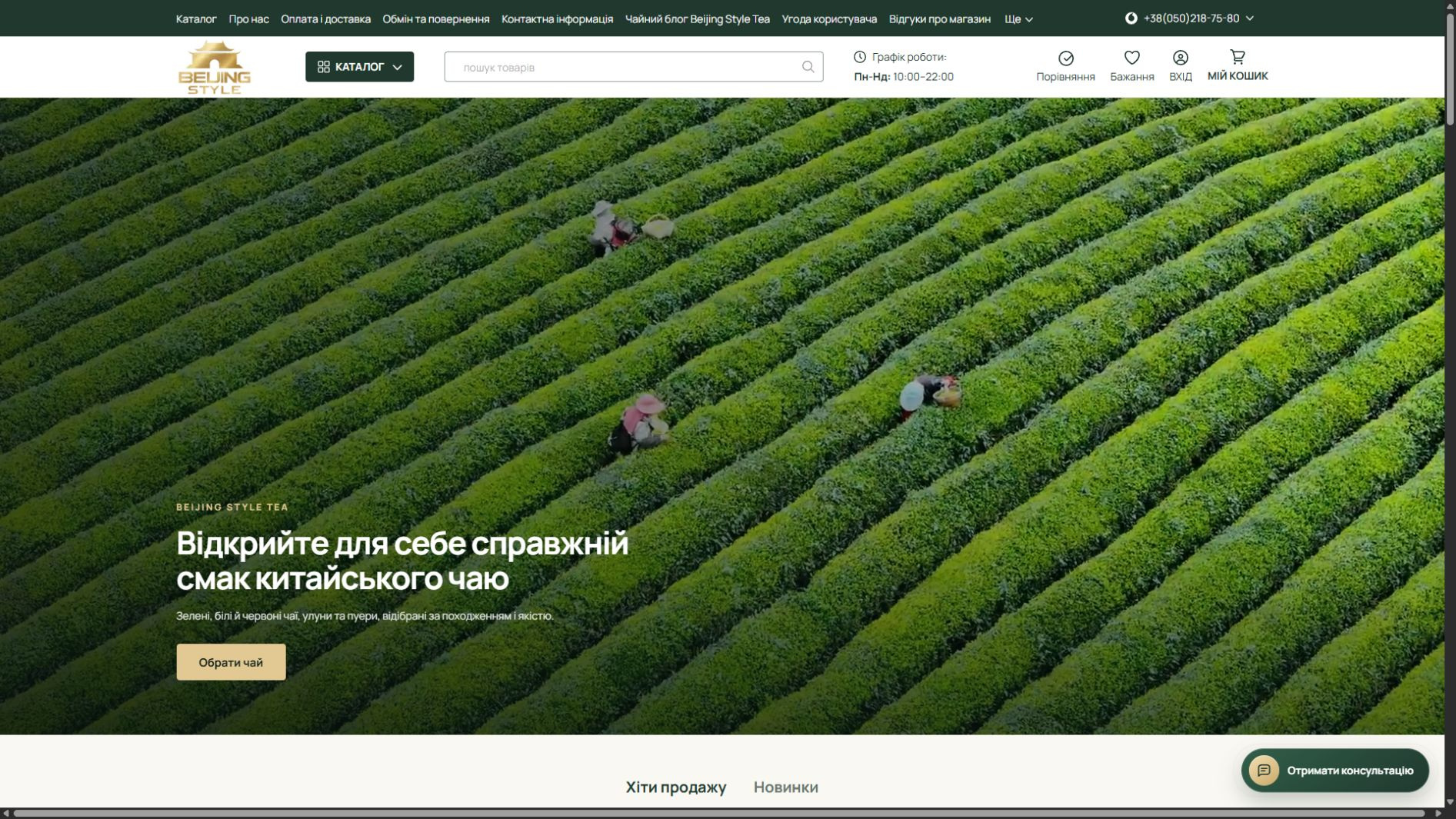
From a restaurant
to a tea store.
Beijing Style in Kyiv is known for Chinese food and Peking duck. Its owners bring tea from China themselves and wanted to sell it online across Ukraine.
The task wasn’t just to list products but to assemble the structure of a real online store: catalog, personal account, cart, comparison, favorites and all the pages needed to launch ads in Google Merchant.
- Format
- Online store
- Platform
- Horoshop
- Niche
- Chinese tea
- Market
- Ukraine
- Timeline
- 21 working days
- SEO
- Basic SEO
- Launch
- with Google Search Console connected
A store that
sells tea, not cards.
We thought through the structure instead of just uploading products: it makes choosing easy for shoppers and makes the catalog easy for Google to understand.
01. The structure of a full store
Catalog, cart, personal account, comparison and favorites, plus “About us”, “Payment and shipping”, “Exchange and returns”, contacts and reviews pages. Everything needed for Google Merchant.
02. Video on the home screen
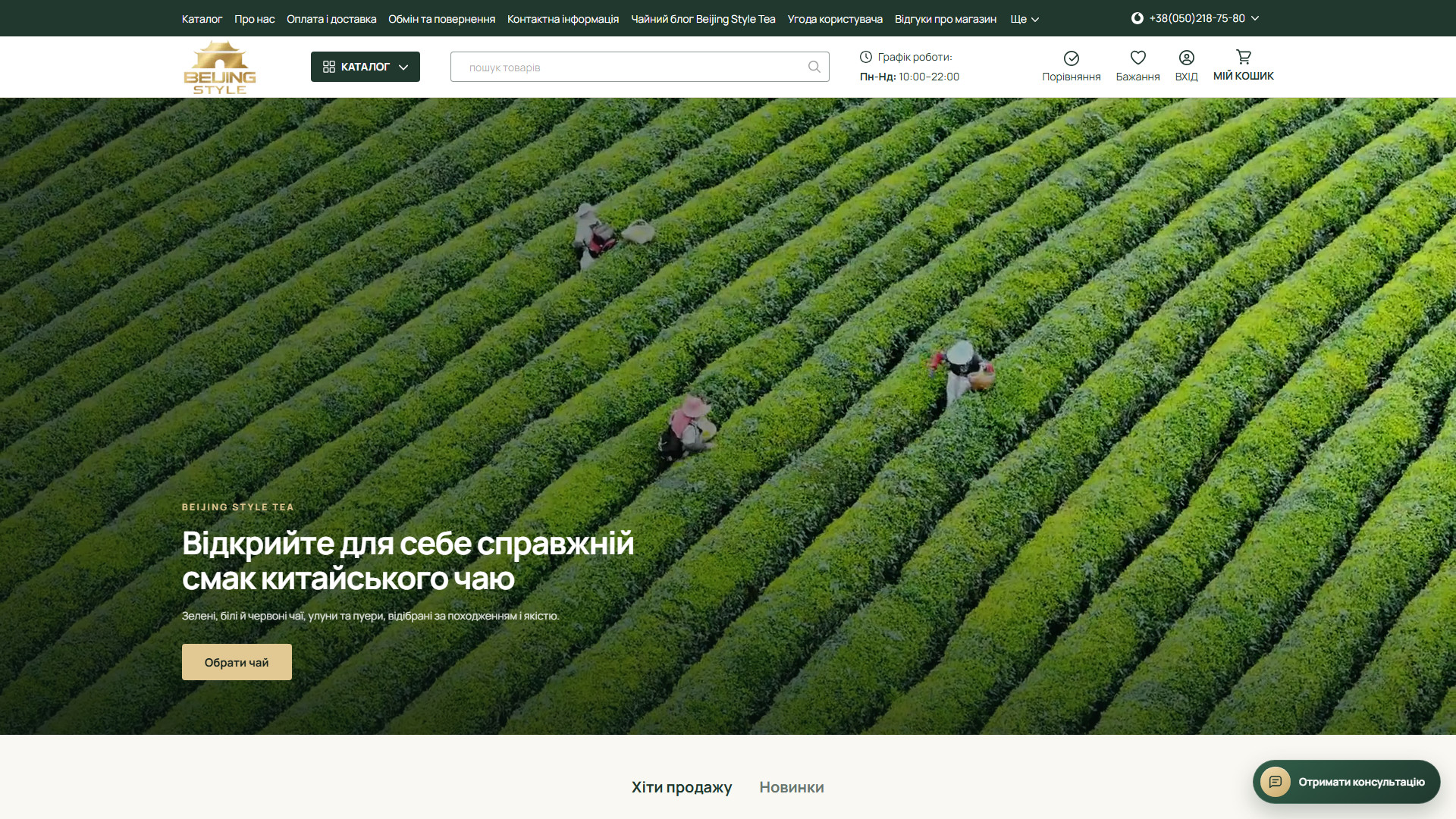
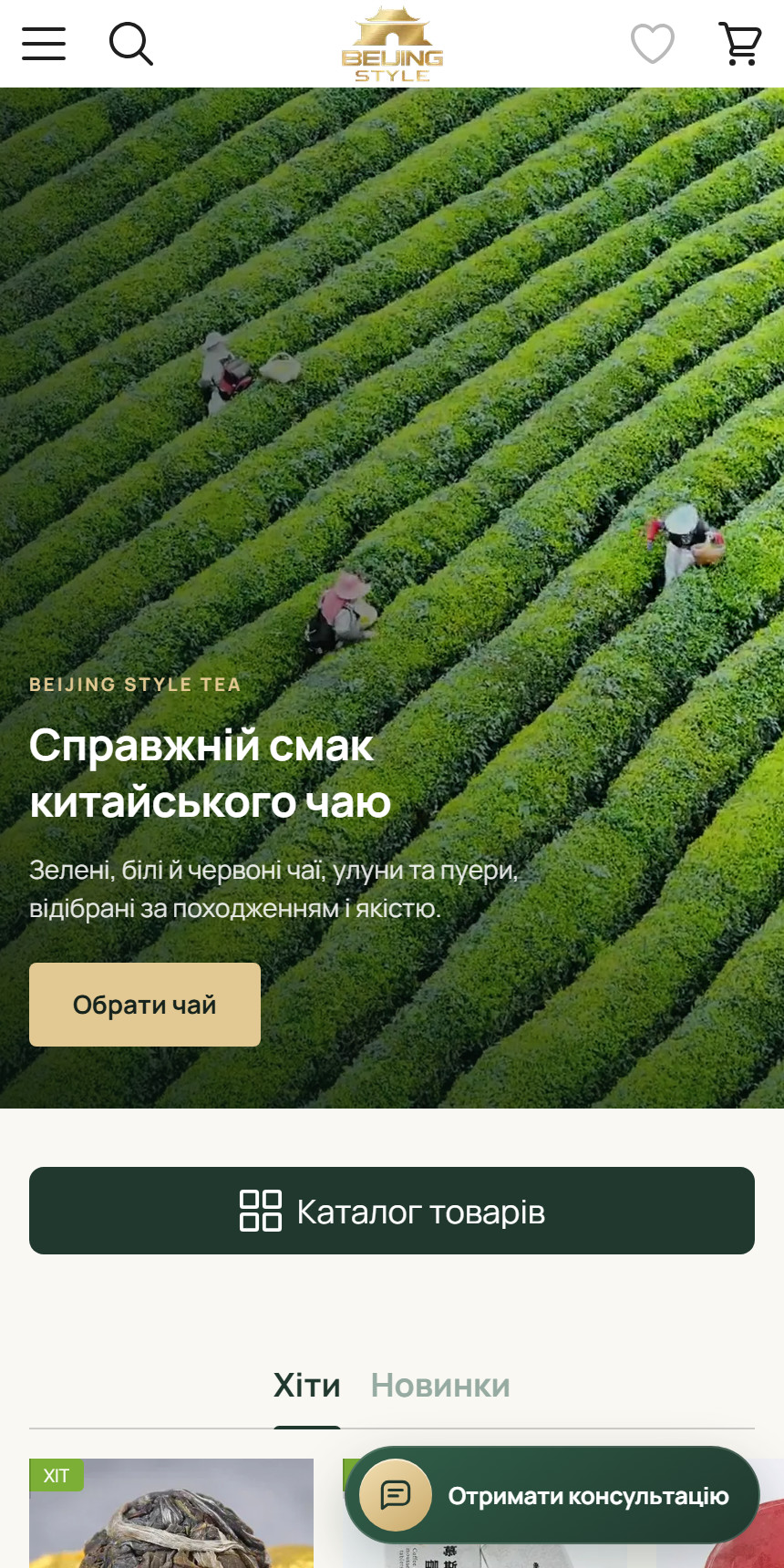
Horoshop doesn’t allow a video background in the main block. The client wanted one, so we added the video with custom code, and the site greets visitors with a tea plantation.
03. Catalog with unique descriptions
73 products in 10 categories. Every card has a unique description: variety, origin, format, taste and brewing tips.
04. SEO for every category
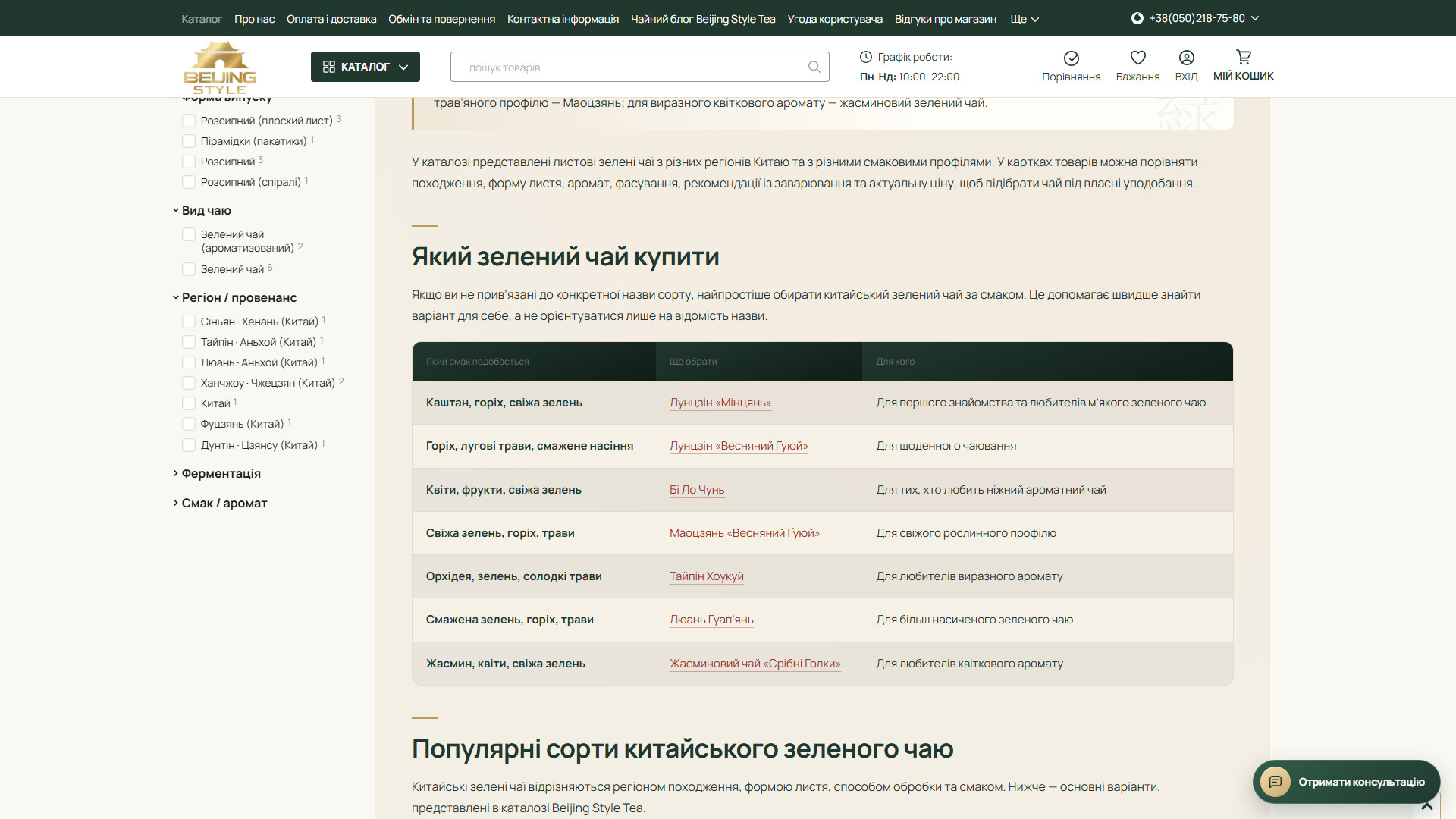
Each category has its own SEO text with buying tips, a flavor table and answers to questions. Categories work as landing pages.
05. Payment and shipping
Card payment through LiqPay, bank transfer, delivery by Nova Poshta. Free shipping from UAH 2,000, minimum order from UAH 300.
06. Chinese-style design
Each page was refined with HTML, CSS and JavaScript so the whole site has one visual style: from the tea-colored palette to Chinese characters in the details.
A tea plantation
instead of a banner.
The first thing visitors see is a video of a tea field and a clear action: “Choose tea”. Next to it is a floating widget for instant consultation.
Categories and the blog right on the home page.
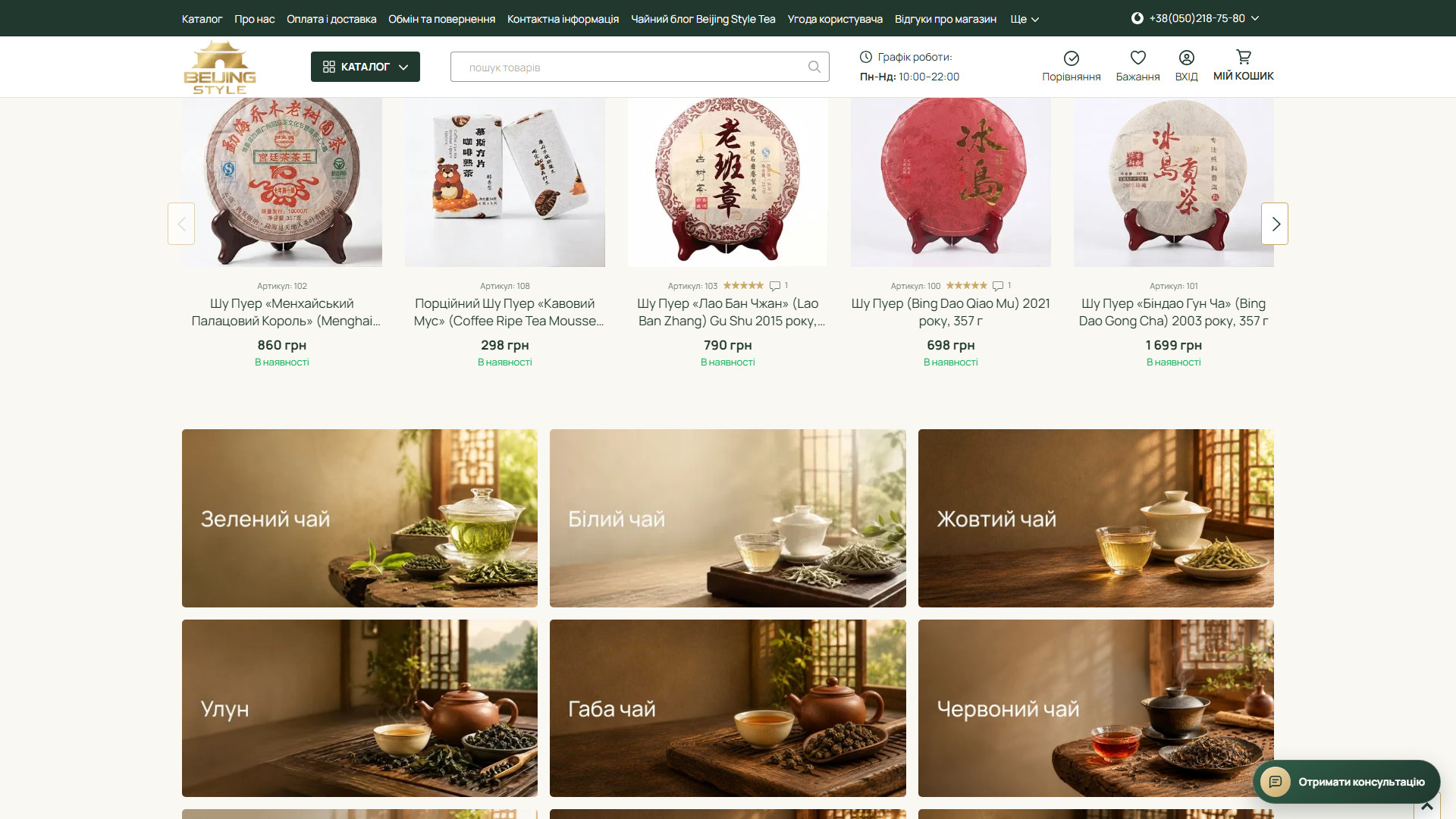
Under the bestsellers we placed category cards and the latest blog posts. Shoppers go quickly to green tea, red tea or pu-erh, and blog readers land in the store.
Every category
answers a search query.
People search for “green tea” or “which pu-erh to buy”. So each category has not only products but also useful text: how to choose tea, how varieties differ and how to brew them.
- Products in the catalog
- 73
- Categories
- 10 · green, white, yellow, oolong, GABA, red, black, pu-erh, light, gift sets
- Product descriptions
- unique for every card
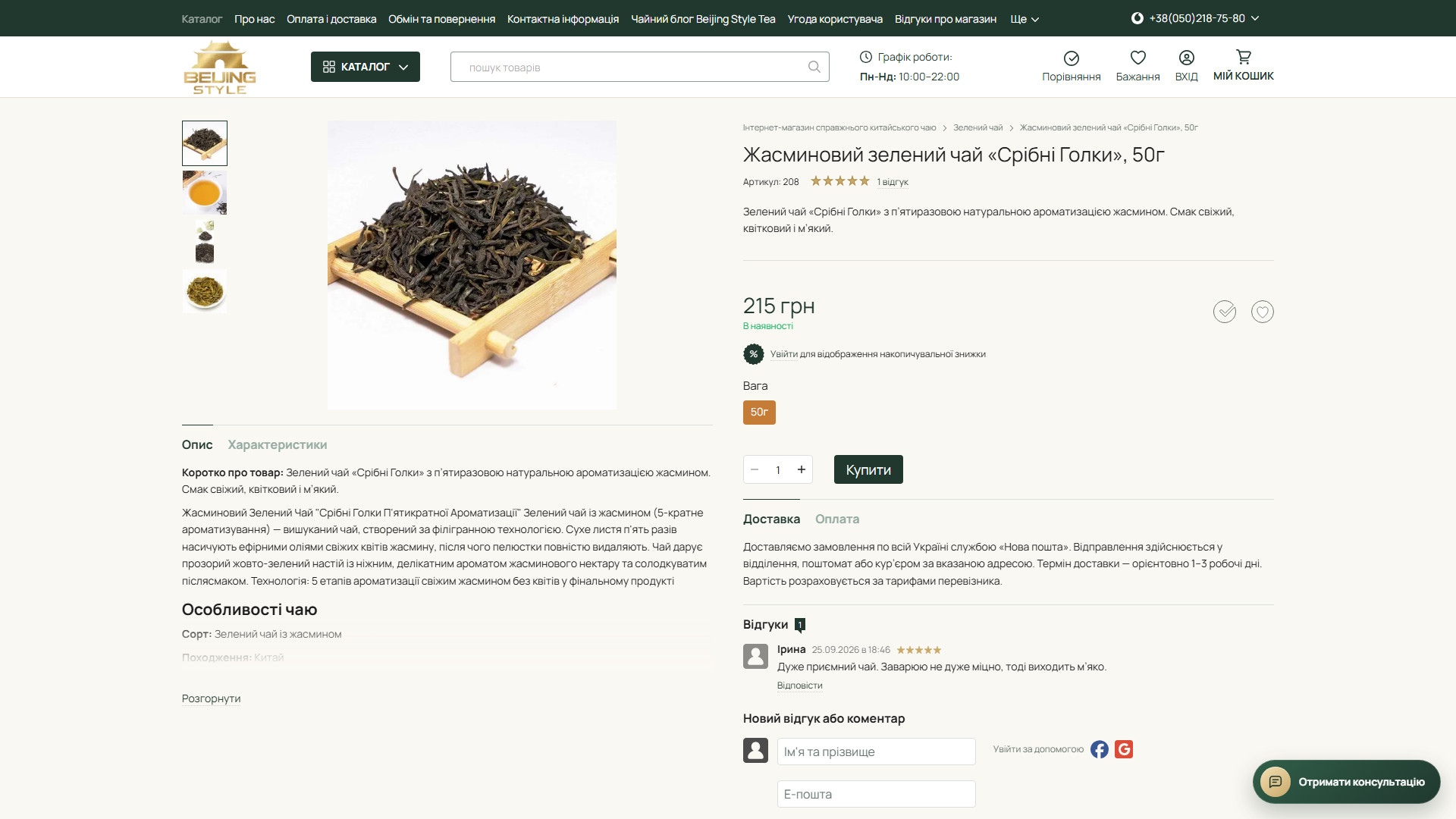
A product card with a description and brewing.
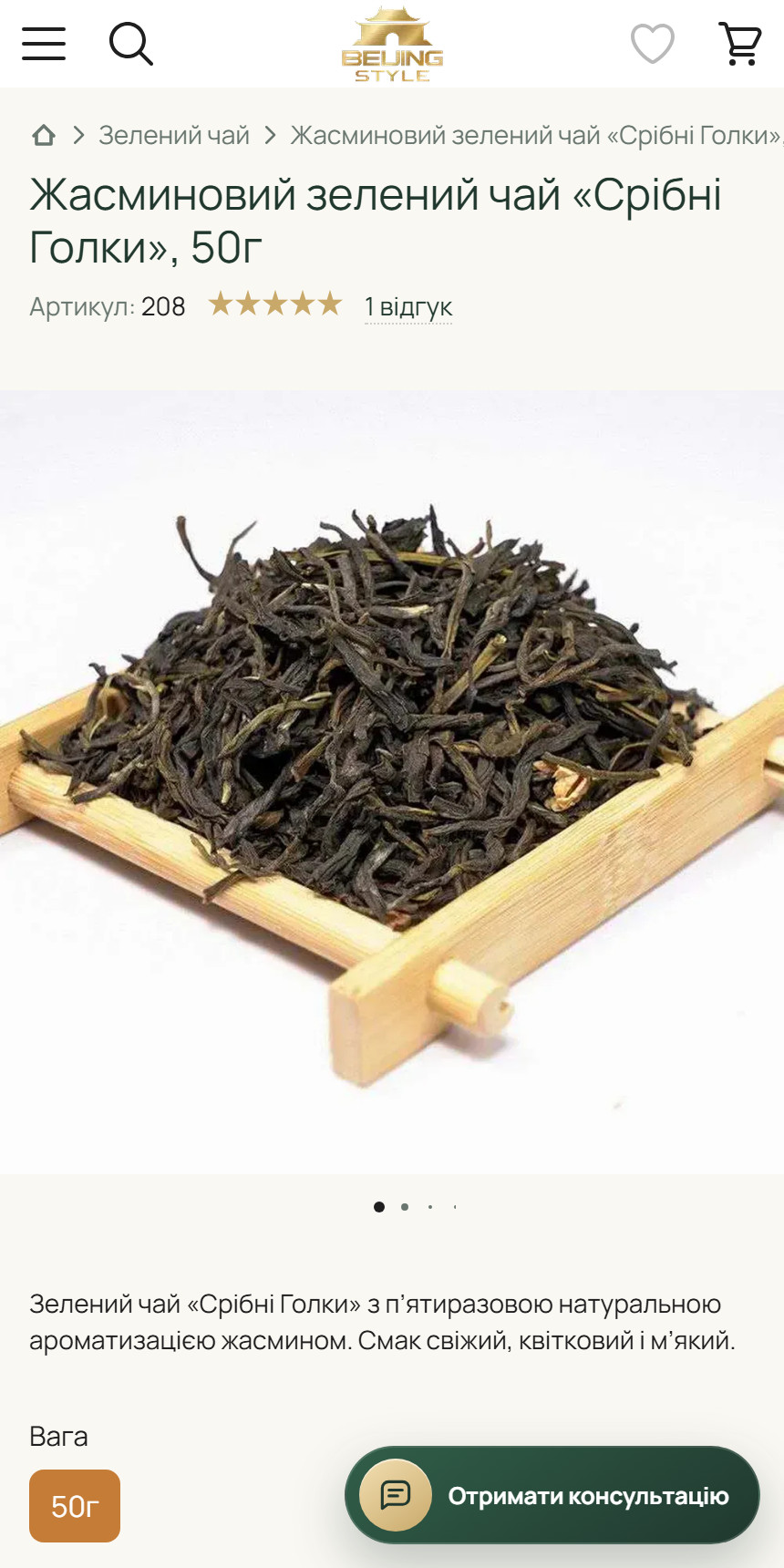
The card has a short description, the tea’s features, origin, brewing tips, questions and answers, reviews and a weight choice. Shoppers see everything they need without leaving the page.
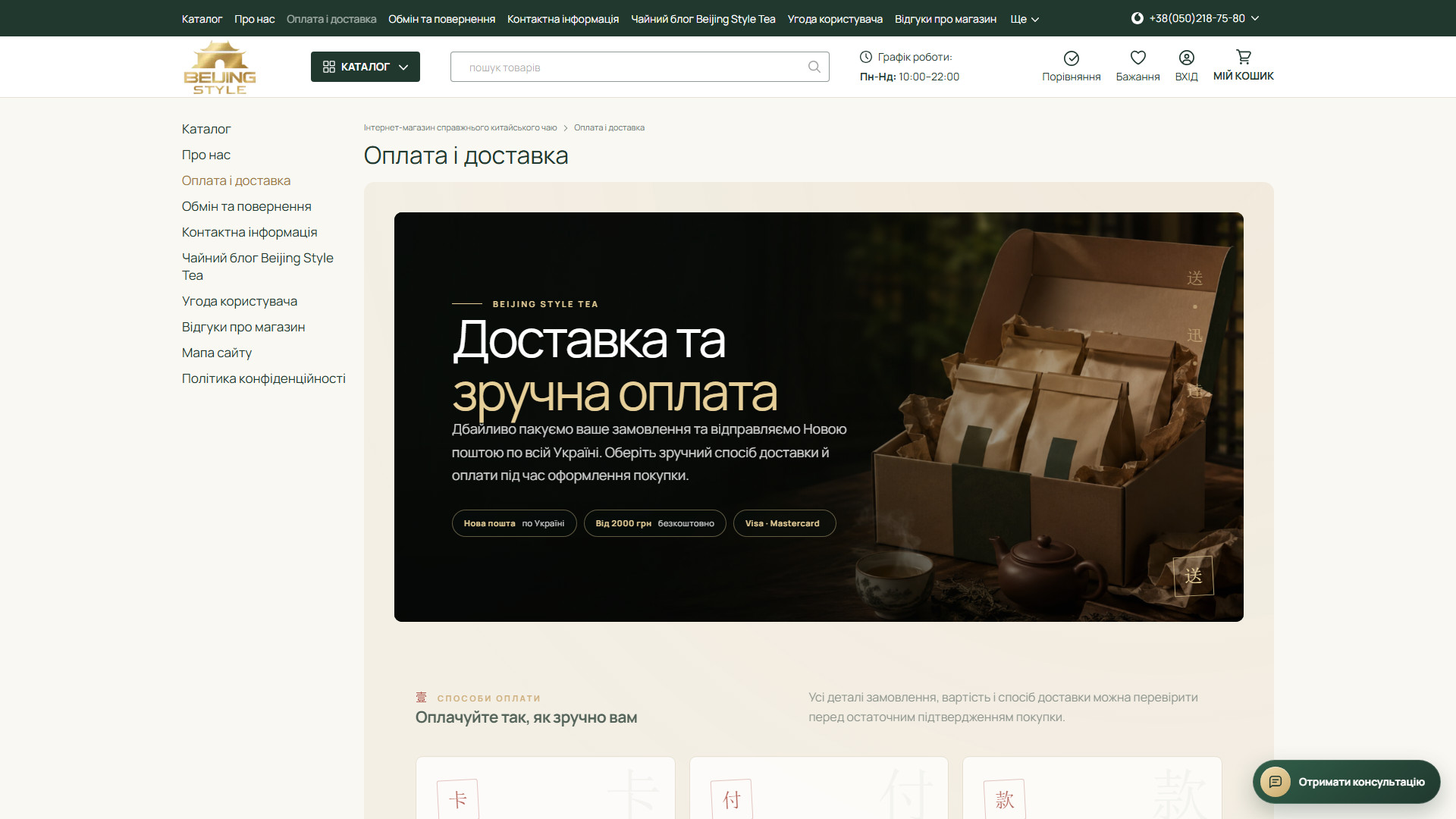
An order without
unnecessary questions.
The “Payment and shipping” page explains everything before checkout: payment methods, free shipping terms and the steps after the payment is confirmed.
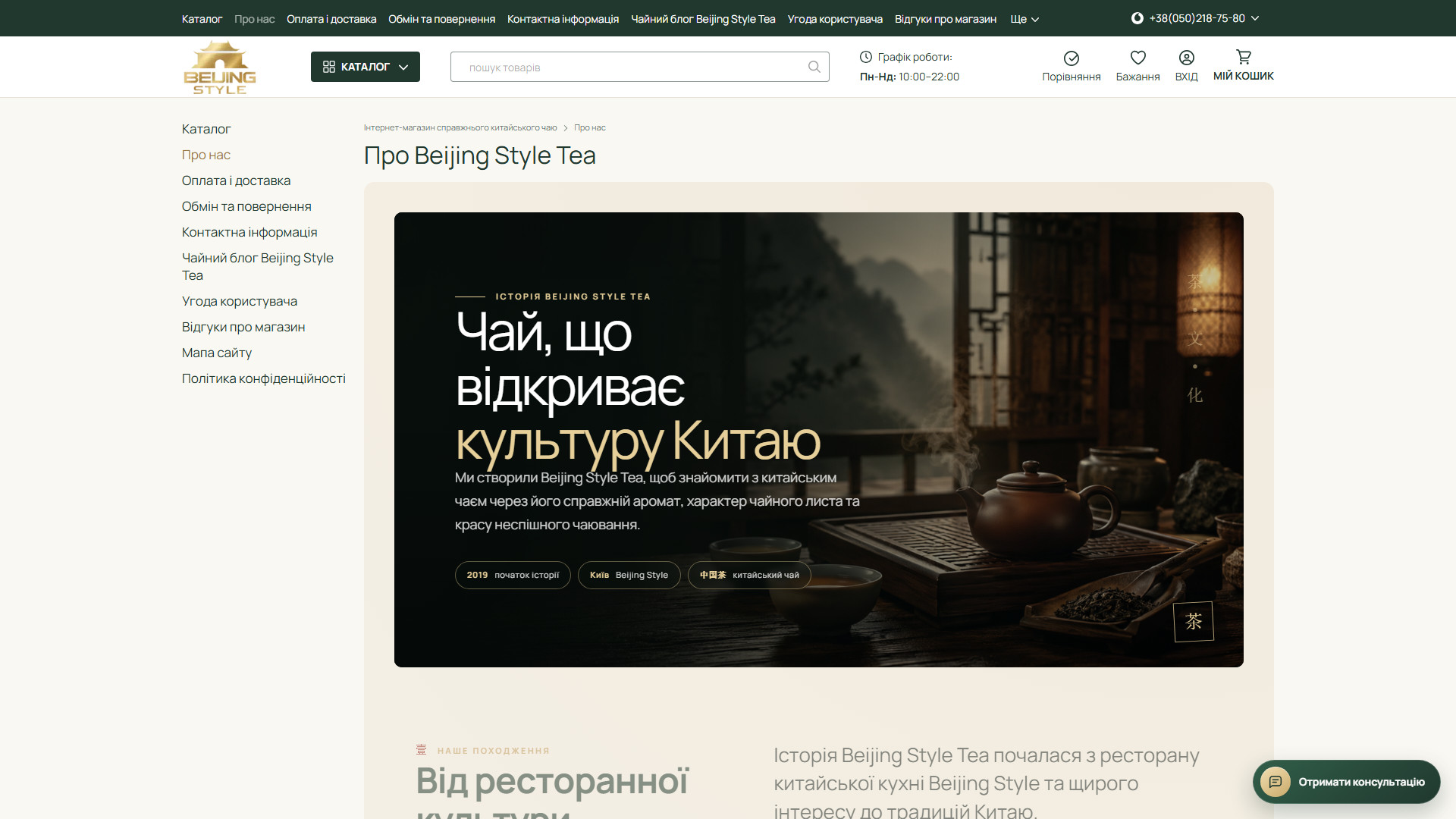
A piece of China
in every detail.
The “About us” page tells the story from the Beijing Style restaurant to its own tea selection. Chinese characters, a dark palette and themed illustrations set the right mood.
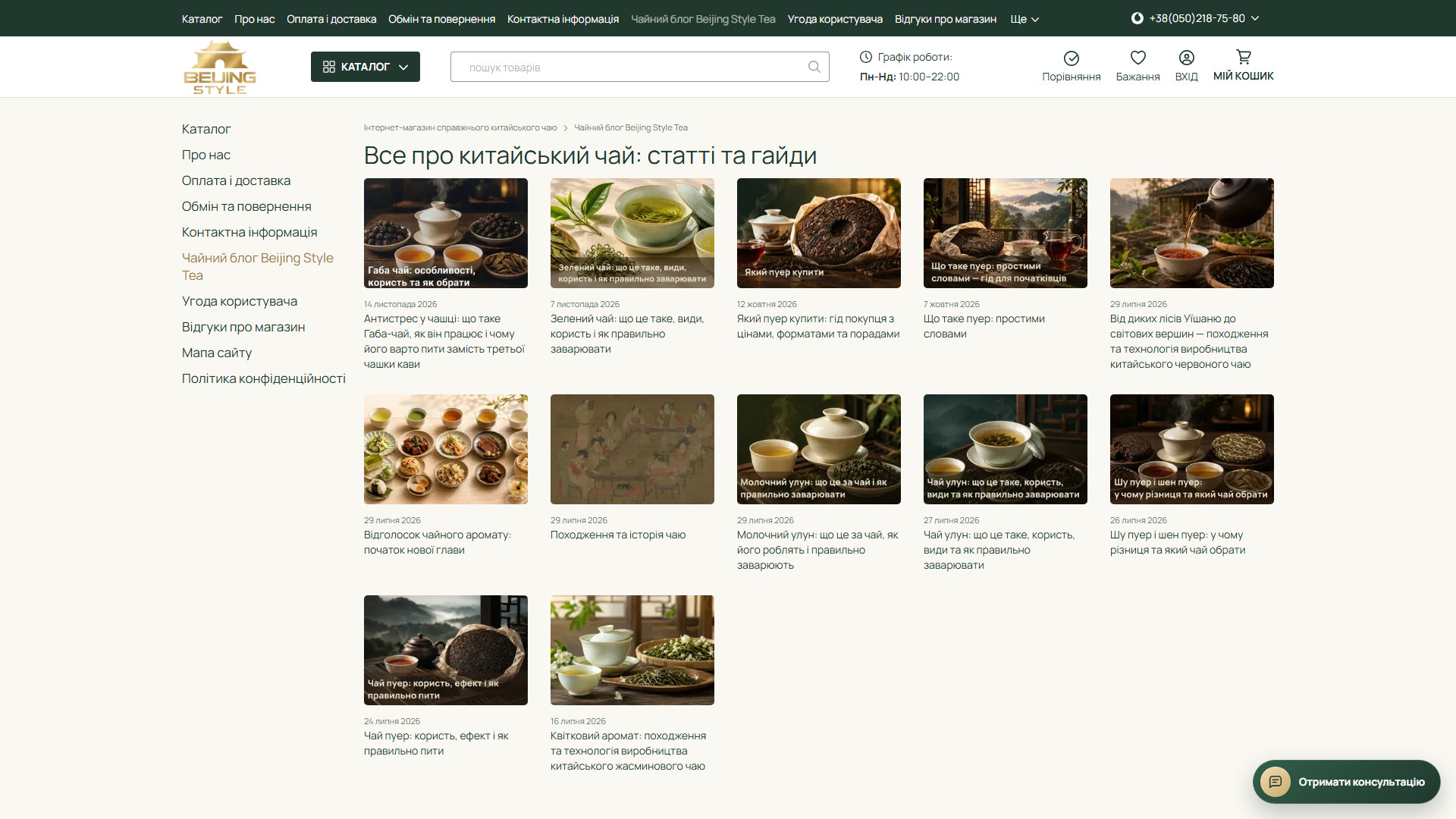
A tea blog that brings in buyers.
The blog already has 12 articles and guides on pu-erh, oolong, green tea and GABA tea. Customers read, choose a tea and go to the store. The blog can grow into a separate traffic channel.
Tea in your pocket.
No compromises.
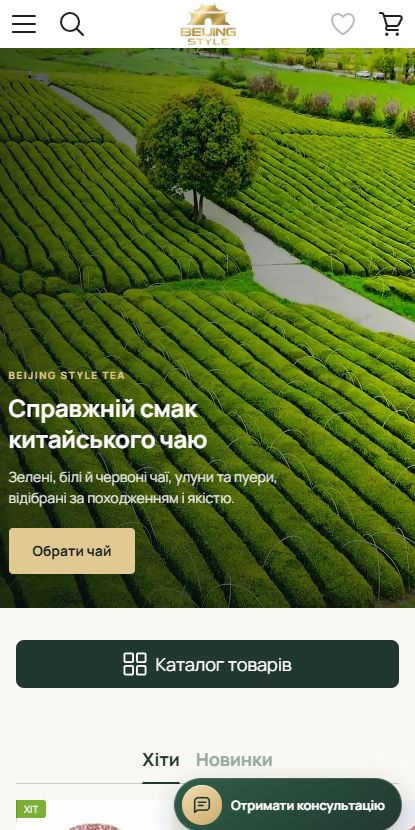
The video, catalog and product card work just as comfortably on a phone: large buttons, fast search and the cart within reach.
- The home screen video and call to action
- Catalog with filters and a weight selector
- Floating consultation widget
- Cart, favorites and search next to each other
Let’s build a store
that sells your product.
We’ll discuss the catalog, structure and SEO. After that you get a clear plan, the cost and the timeline. After launch the site is added to Google Search Console so indexing starts from the first days.