TepTep.
A rebrand and full launch on Shopify.
A brand of bags, clothing and accessories used to run on Tilda under the name “Teplota”. After the rebrand to TepTep, the site was rebuilt on Shopify, with payment for Ukrainian cards and a CRM that Shopify doesn’t support out of the box.
Open the site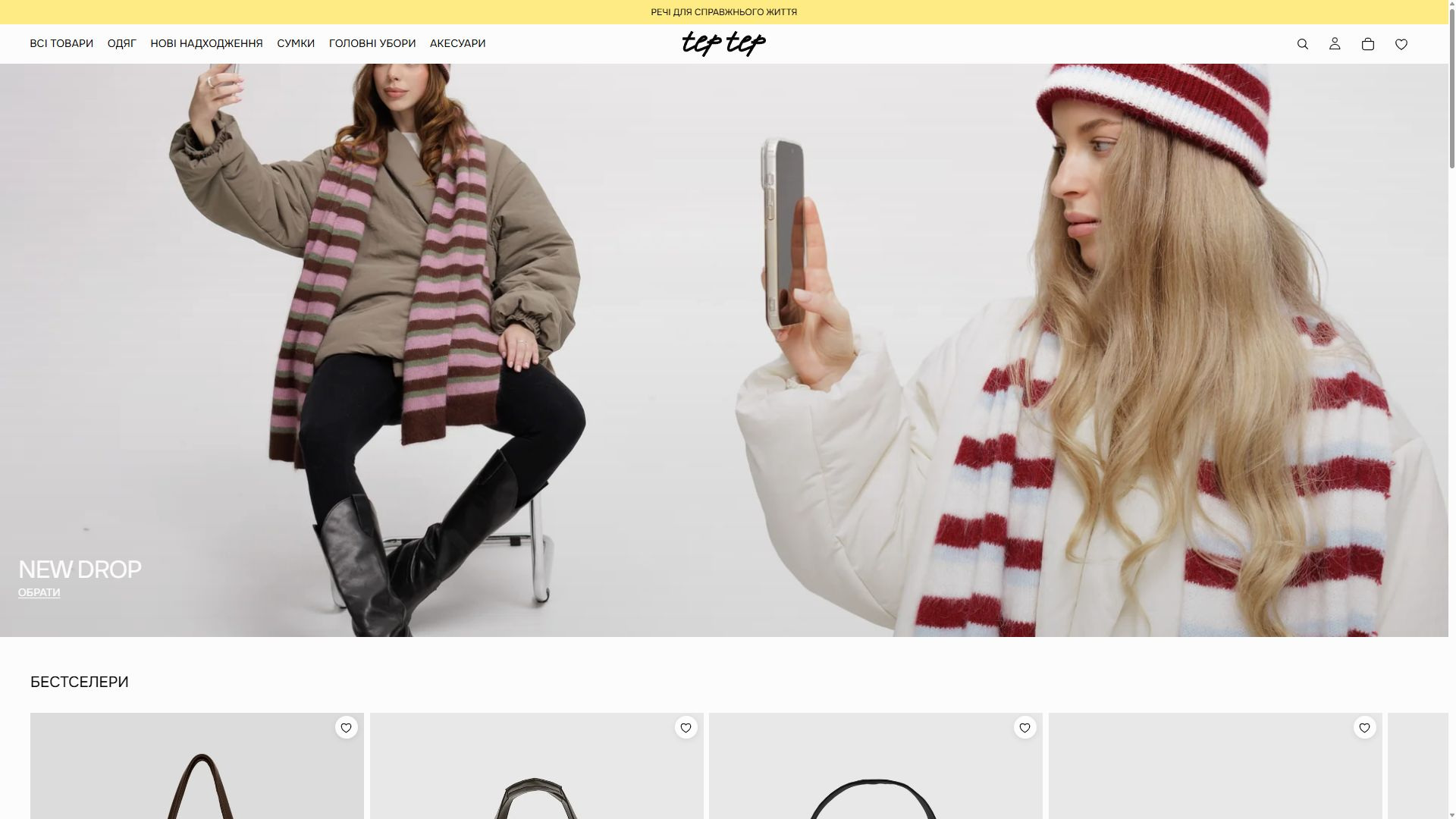
A new brand —
a new store from scratch.
Before the rebrand the brand operated as “Teplota” on Tilda. When the company went through a full rebrand to TepTep, it became clear the new identity needed not a cosmetic redesign but a store built from scratch on a platform that can carry a catalog, order growth and complex integrations.
We chose Shopify and the Horizon theme as the base and adapted it specifically for this business: for the range, for payment with Ukrainian cards and for stock accounting handled by the owner.
- Format
- Online store
- Platform
- Shopify, Horizon theme
- Niche
- Bags, clothing, accessories
- Market
- Ukraine
- Timeline
- 28 working days
- SEO
- Basic SEO
From Tilda
to Shopify.
The project covered the full cycle: design and layout on the new platform, adapting a ready-made theme to the brand, connecting payment and mail and syncing with the owner’s CRM.
01. Moving to Shopify
I built the store from scratch on Shopify instead of migrating the finished Tilda site: TepTep’s new identity required a new catalog structure, not a transfer of the old “Teplota” pages.
02. Customizing Horizon
I took the Horizon theme as the base and refined it for the specific business: collection structure, the product card, the home page and the new brand’s identity.
03. Payment for Ukrainian cards
Shopify has no payment solution of its own for Ukraine, so I connected WayForPay so buyers pay with Ukrainian Visa/Mastercard cards right in the store and the business owner receives the funds correctly.
04. Mail, domain, launch
I set up transactional email templates in the brand’s style, connected the custom domain teptep.com.ua and ran final testing before launch.
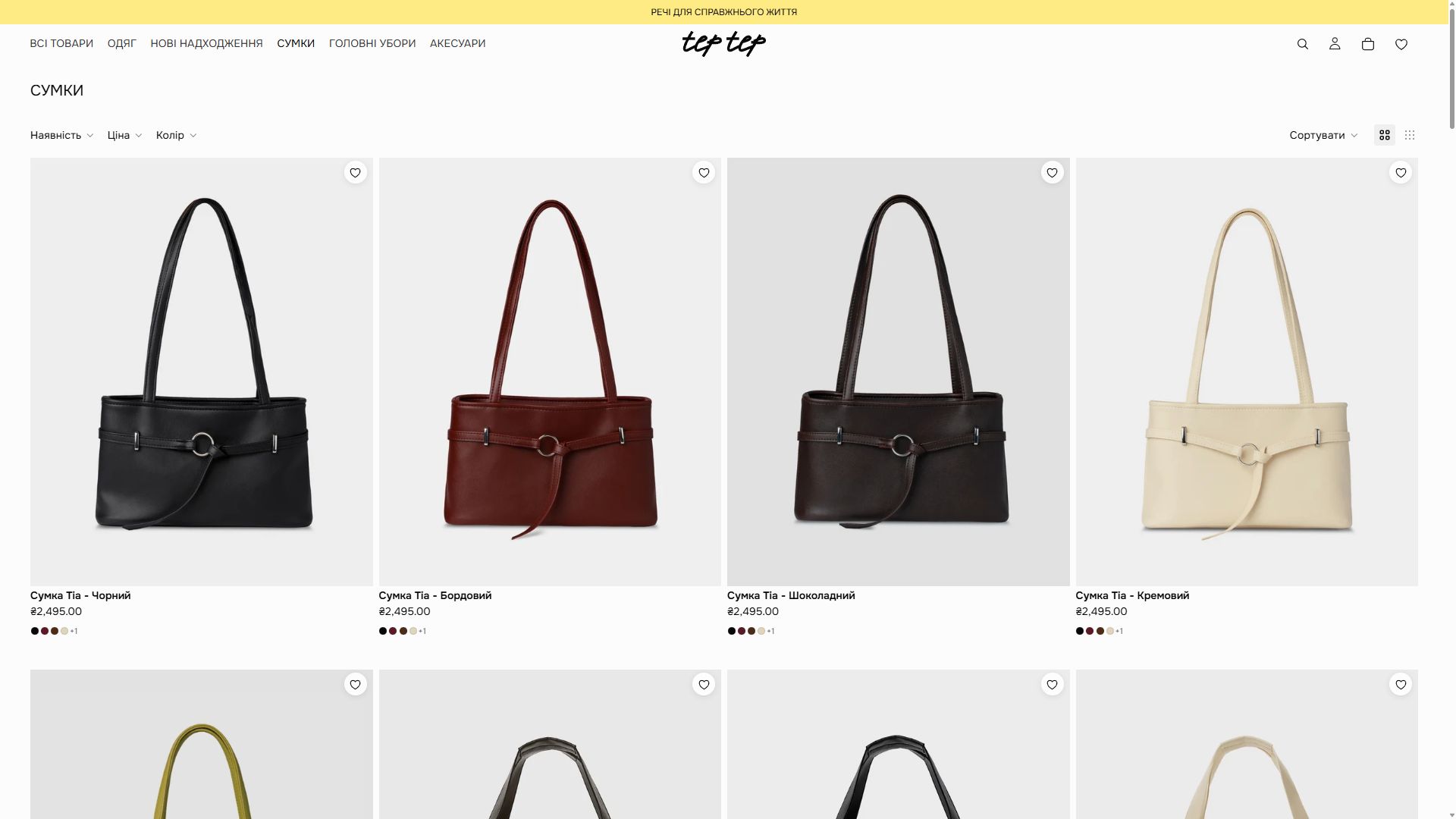
The product in focus.
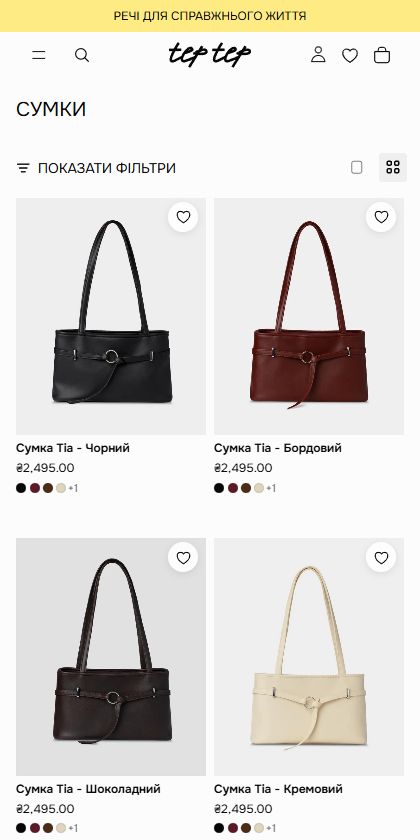
A minimalist grid doesn’t compete with the photos. Color, price and model name stay close together, so buyers can compare items without extra clicks.
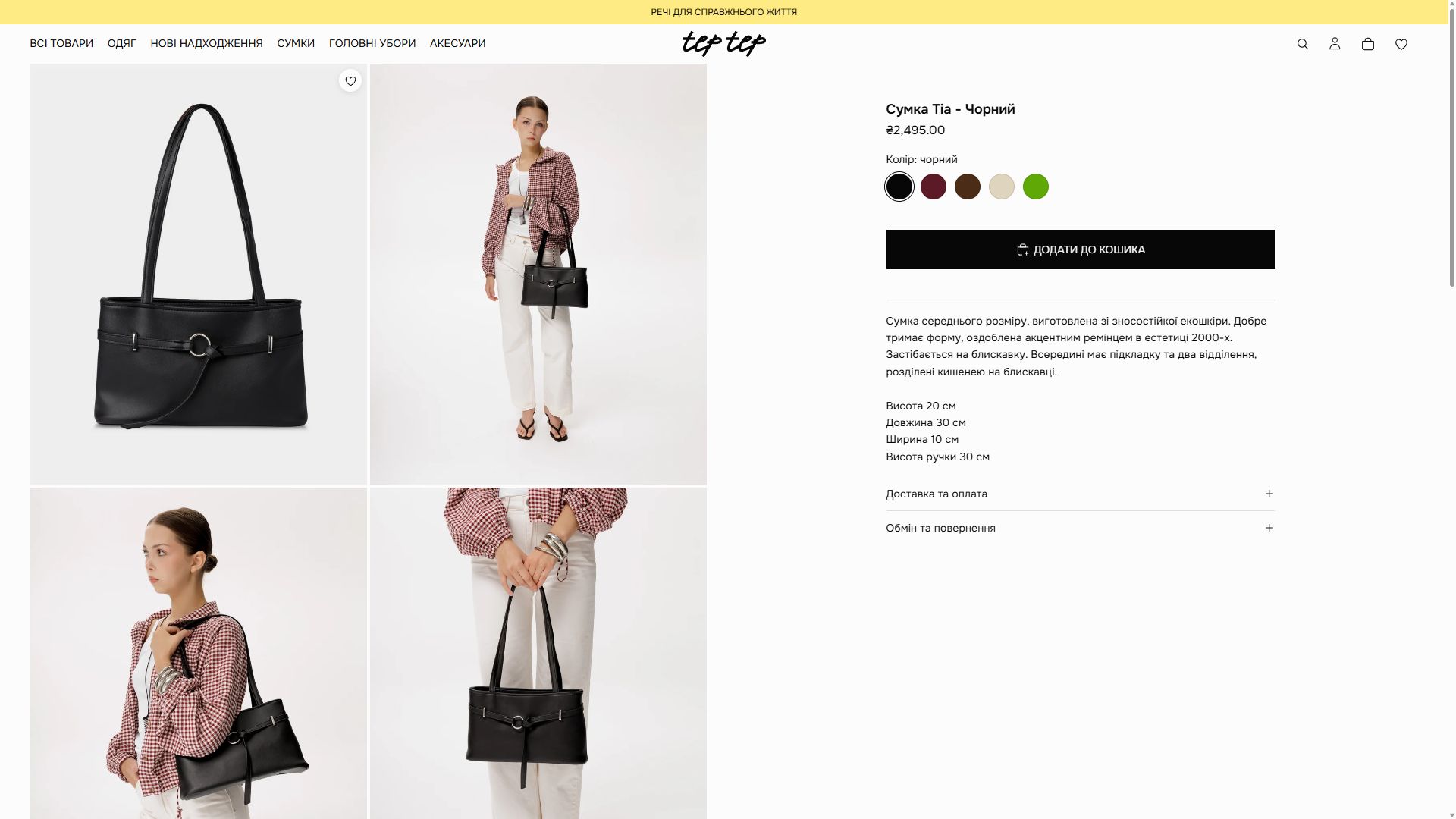
A card that helps you choose.
A large photo shows texture and shape, and the color options and product information help make the decision without extra questions in Direct.
KeyCRM on Shopify —
with no ready-made connector.
The business owner keeps stock and sales records in KeyCRM. The problem is that Shopify has no direct, native integration with KeyCRM: no out-of-the-box solution for this pair of services exists.
We solved it with a custom Worker script that syncs the store and the CRM in both directions: current stock levels are pulled into Shopify, and sales data goes into KeyCRM automatically, with no manual transfer of numbers and no mismatch between what the site shows and what is actually in the warehouse.
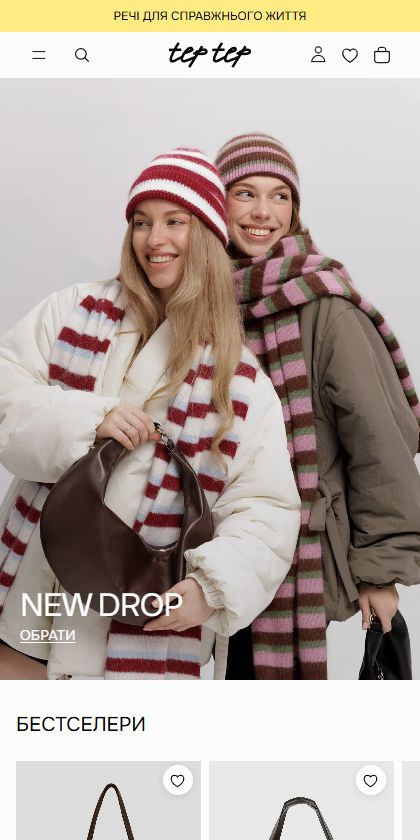
The same character.
A smaller screen.
The store stays recognizable and easy to use on a phone: from the first photo to choosing an item in the catalog.
- Full mobile navigation
- Large collection photos
- Access to search and the cart
- A catalog adapted to a narrow screen
Let’s build a store
that conveys your brand’s value.
We’ll discuss the range, goals and the integrations you need. After that you get a clear plan, the cost and the timeline.